
CBD and Dementia: Exploring Potential
Benefits for Cognitive Health
Quick Snapshot
“Exploring the potential of CBD in dementia care opens new doors for easing agitation, sleep issues, and neuroinflammation. Backed by emerging science and ongoing trials, this guide reveals how CBD may enhance quality of life and reshape cognitive health strategies.
table of contents
- Introduction – Understanding the Link Between CBD and Dementia
- What is CBD? A Quick Overview
- Dementia and Cognitive Decline: A Growing Global Concern
- The Promise of CBD in Managing Dementia Symptoms
- The Science Behind CBD’s Potential in Dementia Treatment
- Clinical Evidence: What Does the Research Say?
- Safety and Side Effects of CBD for Dementia Patients
- CBD and Dementia Care: Practical Applications
- Future Outlook: The Potential of CBD in Dementia Research
- Final Words: CBD as a Promising Adjunct in Dementia Care
Introduction – Understanding the Link Between CBD and Dementia
Dementia affects more than 55 million people globally, placing a heavy emotional and
economic burden on families and healthcare systems. Alzheimer’s disease alone accounts for
around 60–70% of all cases, making it the most recognized but not the only form of dementia.
As traditional treatment options provide only modest relief, interest has grown in alternative
approaches that could improve symptom management within the broader framework of
dementia care services. One compound receiving particular attention is cannabidiol (CBD), a
non-psychoactive extract of the cannabis plant.
Unlike its counterpart tetrahydrocannabinol (THC), CBD does not cause intoxication or
euphoria. Instead, it interacts with the endocannabinoid system, a network involved in
regulating mood, memory, sleep, and inflammation. Early laboratory and animal studies
suggest CBD may reduce neuroinflammation, ease behavioral symptoms, and potentially
protect neurons from further decline. However, much of the research to date has focused more
on THC than CBD, with several ongoing trials now evaluating CBD’s role in dementia care,
according to the National Institute on Aging. This emerging scientific interest makes CBD both
a promising and controversial subject, necessitating a balanced consideration of its potential
and limitations in the context of cognitive health.
What is CBD? A Quick Overview
Cannabidiol, commonly called CBD, is one of over a hundred cannabinoids identified in
cannabis plants. Unlike THC, the psychoactive component responsible for the “high,“ CBD does
not impair judgment or cause intoxication. This distinction has fueled interest in its therapeutic
use for a wide range of conditions, including anxiety, chronic pain, epilepsy, and, more recently,
dementia-related symptoms.
CBD exerts its influence through the endocannabinoid system, particularly by modulating CB1
and CB2 receptors that regulate processes such as immune response, inflammation, and neural
communication. These pathways hold particular relevance for dementia, where inflammation
and disrupted neurotransmission contribute to progressive decline. CBD’s ability to interact
with serotonin receptors also suggests benefits for mood regulation, which may help manage
agitation and depression in dementia patients.
The compound is available in several delivery formats, each with unique absorption rates. Oils
and tinctures taken under the tongue allow rapid entry into the bloodstream. Capsules and
edibles provide longer-lasting effects but a slower onset of action. Topical creams target
localized discomfort such as muscle stiffness. These varied options make CBD adaptable to
patient needs; however, dosage and product quality require medical oversight to ensure safe
and consistent use.
Dementia and Cognitive Decline: A Growing Global Concern
Dementia encompasses a spectrum of neurodegenerative disorders, including Alzheimer’s
disease, vascular dementia, frontotemporal dementia, and Lewy body dementia. Each presents
distinct characteristics, yet all involve progressive impairment of memory, decision-making, and
communication. The trajectory of these conditions typically shifts from mild forgetfulness to
severe dependence, often accompanied by behavioral changes such as agitation or anxiety.
The global burden continues to rise. According to the World Health Organization, dementia
cases are expected to nearly triple by 2050. Beyond the emotional toll, the condition carries
immense financial strain, with worldwide costs surpassing \$1 trillion annually. Families often
shoulder caregiving responsibilities, and the Alzheimer’s Association reports that U.S.
caregivers provided over 18 billion hours of unpaid care in 2023, valued at nearly \$340 billion.
This reality highlights the urgent need for supportive therapies that address not only cognitive
decline but also behavioural and psychological symptoms.
Conventional treatments such as cholinesterase inhibitors and memantine slow symptom
progression but offer limited efficacy and do not alter the underlying disease process. As a
result, researchers have turned their attention to compounds like CBD, which may target
inflammation, oxidative stress, and neuronal health. The exploration of CBD represents part of
a broader effort to identify therapies that can both alleviate symptom burden and enhance
overall quality of life for patients and caregivers.
The Promise of CBD in Managing Dementia Symptoms
CBD holds potential for alleviating several distressing symptoms associated with dementia. One
area of promise lies in reducing brain inflammation, a key driver of neurodegeneration. Studies
on animal models show that CBD lowers markers of oxidative stress and inflammation, which
may slow the damage caused by toxic protein buildup in conditions such as Alzheimer’s.
Although these findings require human confirmation, they indicate a mechanism through which
CBD could protect cognitive function.
Beyond inflammation, CBD may help address behavioral challenges like anxiety, agitation, and
restlessness, which often worsen in the evenings through a phenomenon known as
“sundowning.“ Early clinical observations suggest that CBD’s calming properties can reduce
agitation and improve mood stability in dementia patients. Better emotional balance may also
ease caregiver stress, an important aspect often overlooked in treatment.
Sleep disruption represents another widespread challenge for dementia patients, contributing
to further cognitive decline. By interacting with receptors involved in sleep regulation, CBD
shows potential to improve both sleep duration and quality. While no single intervention
reverses dementia, these combined benefits suggest CBD may complement existing treatments, enhancing daily well-being for those living with the condition.
The Science Behind CBD’s Potential in Dementia Treatment
CBD operates through multiple molecular pathways that intersect with dementia’s pathology. It
modulates CB1 and CB2 receptors and influences oxidative stress and inflammatory signaling. In animal models of Alzheimer’s disease, CBD administration reduced amyloid-β and tau
accumulation, lowered oxidative markers, and reversed memory impairment, as reported in
Cells (2023). According to MDPI Brain Sciences (2021), additional in vivo evidence confirms that
CBD can restore cognitive function by attenuating neuronal damage and reducing
neuroinflammation.
CBD also influences serotonin and vanilloid receptors, which play roles in mood regulation and
pain perception. These pathways may explain observed improvements in agitation and
emotional disturbances among dementia patients exposed to cannabinoids. Importantly, CBD
appears to increase levels of brain-derived neurotrophic factor (BDNF), a protein essential for
neuron survival and synaptic plasticity. Higher BDNF levels are associated with improved
memory formation and resilience against neurodegeneration.
Emerging mechanistic research highlights CBD’s effect on immune regulators, such as IDO and
cGAS, which reduces key pro-inflammatory cytokines in Alzheimer’s mice. Collectively, these
studies reveal how CBD addresses neuroinflammation, protein aggregation, oxidative stress,
and immune dysregulation—forming a multi-faceted therapeutic profile highly relevant to
dementia’s complex nature.
Clinical Evidence: What Does the Research Say?
Clinical research on CBD for dementia remains limited, but interest is growing. A systematic
review published in 2021 examined four studies involving 126 participants with Alzheimer’s or
other forms of dementia. While some improvements were observed in agitation and sleep,
most trials investigated THC rather than CBD, leaving a significant gap in direct evidence
PubMed 2021 Review. The review underscored the need for larger, high-quality trials focusing
specifically on CBD.
A 2022 review evaluated cannabinoids across neurocognitive disorders, including Parkinson’s,
Huntington’s, and Alzheimer’s disease. Findings suggested CBD offered benefits for behavioral
and motor symptoms in Parkinson’s and Huntington’s, but less consistent results in dementia.
These outcomes highlight the complexity of translating laboratory promise into clinical practice,
where patient variability and disease progression influence results.
Despite limitations, several ongoing trials aim to clarify CBD’s safety and effectiveness in
dementia care. Institutions such as the National Institute on Aging and Alzheimer’s Disease
Research Centers are conducting studies to explore optimal dosing, delivery methods, and
long-term outcomes. As these results emerge, they will determine whether CBD transitions
from experimental interest to evidence-based adjunct therapy.

Safety and Side Effects of CBD for Dementia Patients
Although CBD is widely regarded as safe for most users, dementia patients require careful
supervision due to their age, health status, and multiple medications. Common side effects
reported include fatigue, changes in appetite, diarrhea, and dizziness. In some cases, CBD may
cause drowsiness or sedation, which could worsen confusion or mobility challenges in dementia
patients. Reports also mention irritability or agitation, as mentioned in the FDA Consumer
Update, highlighting the importance of personalized monitoring.
Drug interactions represent a significant concern. CBD influences liver enzymes responsible for
metabolizing many medications, such as anticoagulants, antidepressants, and sedatives. This
effect can intensify side effects or reduce drug effectiveness. Elderly patients often take several
prescriptions, making them particularly vulnerable to harmful interactions. Professional
oversight ensures these risks are addressed before incorporating CBD into a care plan.
Another safety consideration lies in product quality. The market for CBD products remains
largely unregulated, with variations in purity and labeling accuracy. Contaminants such as
pesticides or heavy metals may pose additional risks. Selecting products from reputable
manufacturers that undergo third-party laboratory testing is crucial. While CBD may hold
promise, safe integration requires a cautious, medically guided approach.
CBD and Dementia Care: Practical Applications
The practical integration of CBD into dementia care depends on the delivery method, dosage,
and the specific symptoms being managed. Oils or tinctures, often taken under the tongue,
remain one of the most common approaches. Their rapid absorption makes them useful for
addressing episodes of sudden agitation or anxiety. For patients who struggle with swallowing
difficulties, these liquids can also be mixed into food or beverages, offering flexibility without
sacrificing effectiveness.
Another option involves capsules or edible products, which provide a consistent, pre-measured
dose. Because they are digested more slowly, their effects last longer, creating steady support
for mood balance and sleep regulation throughout the day. This reliability can ease the
workload of caregivers, who often benefit from knowing exactly how much CBD a patient has
received. Harvard Health Publishing notes that different CBD forms vary in absorption and
effect duration, making professional guidance crucial when selecting a method.
Topical products such as creams or lotions offer a different benefit by targeting physical
discomfort directly. Applied to muscles or joints, these preparations may reduce stiffness or
pain without introducing cannabinoids into the bloodstream, making them a safer choice for
patients sensitive to systemic effects. Regardless of the form, physicians recommend beginning
with small doses, adjusting gradually, and observing responses closely to ensure CBD
contributes safely and effectively within a dementia care plan.

Future Outlook: The Potential of CBD in Dementia Research
The scientific community continues to explore CBD’s role in neurodegenerative conditions, with
numerous clinical trials underway worldwide. Institutions such as the National Institute on
Aging, Alzheimer’s Disease Research Centers, and platforms like ClinicalTrials.gov list ongoing studies examining how CBD influences cognition, behavior, and quality of life. These trials aim to address key questions about safe dosages, optimal formulations, and long-term effects in populations with dementia.
Future research must clarify whether CBD primarily alleviates secondary symptoms such as
anxiety and sleep disturbances or if it can also modify disease progression by reducing
neuroinflammation and amyloid buildup. Advanced imaging and biomarker studies will help
determine whether CBD’s effects extend beyond symptom relief into slowing the underlying
neurodegenerative process.
Another critical area of exploration lies in combination therapies. Researchers are investigating
whether CBD works synergistically with existing drugs or with other cannabinoids such as THC
in controlled ratios. If proven effective, CBD could become part of multi-targeted treatment
strategies. Although much remains uncertain, the rapid expansion of research reflects growing
recognition of CBD’s potential, offering cautious optimism for its place in future dementia care
models.
Final Words: CBD as a Promising Adjunct in Dementia Care
CBD presents a promising avenue for easing some of the most challenging aspects of dementia,
from anxiety and sleep problems to neuroinflammation. While it cannot cure the condition,
emerging research indicates its potential as a supportive therapy when guided by professional
oversight. Consulting with healthcare providers before introducing CBD ensures a safe and
tailored use that respects each patient’s unique medical needs.
As science uncovers more about CBD’s role in brain health, families and caregivers stand at the
threshold of new possibilities. Could CBD become a cornerstone of future dementia care?
Staying informed, discussing options with doctors, and considering participation in clinical
trials are proactive steps that place patients and caregivers at the forefront of meaningful
change.
Thanks for reading!
recommended products
We all know by now that everyone is different and needs different solutions and dosages, but here you have a guided option and gain a quality of life you deserve.
Showing 13–24 of 28 resultsSorted by popularity
- Sale!

40% Pain Relief CBD Oil
Original price was: 155.00€.99.50€Current price is: 99.50€. Buy Now -

CBD Sleep Solution – 10% with Melatonin
50.00€ Buy Now - Sale!

25% Full Spectrum Pure Organic CBD Oil
Original price was: 99.00€.79.95€Current price is: 79.95€. Buy Now - Sale!

40% Full Spectrum CBD Oil – 4000mg
Original price was: 145.00€.94.50€Current price is: 94.50€. Buy Now - Sale!

15% THC free cbd oil – 1500mg CBD
Original price was: 55.00€.44.95€Current price is: 44.95€. Buy Now -
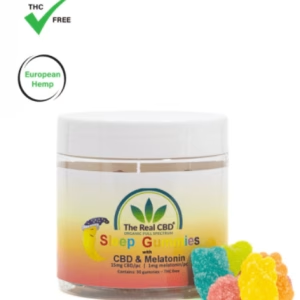
CBD Sleep Gummy bears
22.00€ Buy Now -

CBD and lions mane Capsules full spectrum
45.00€ Buy Now -
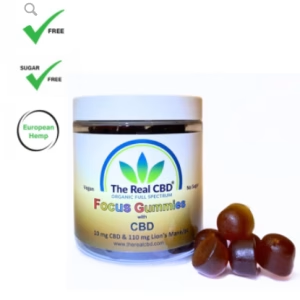
CBD focus gummies
29.00€ -

CBD and Reishi Capsules full spectrum
45.00€ Buy Now - Sale!

CBD/MCT Oil 18% for athletes
Original price was: 75.00€.59.95€Current price is: 59.95€. Buy Now -

CBD/MCT Oil 7% for athletes
30.00€ Buy Now -

CBD Insomnia Sleep Pack – 25% Full Spectrum Oil & Capsules
119.25€ Buy Now
Recent Comments